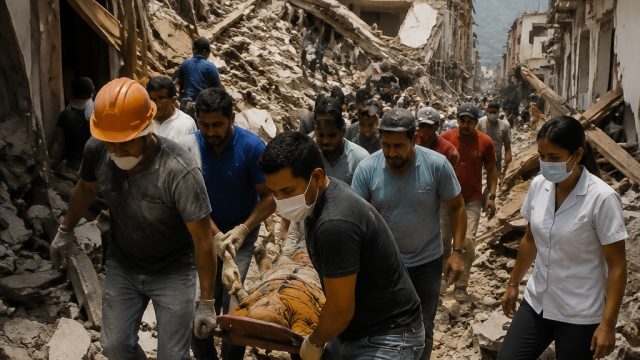
Emergency Response Underway as Flooding Devastates Nepal and China
Key Takeaways
- Over 5,000 individuals are reported missing following severe flooding.
- Emergency services are actively conducting search and rescue missions.
- Flooding has caused significant infrastructure damage in both countries.
- This disaster highlights the vulnerability of communities in monsoon season.
- International aid is being mobilized to support recovery efforts.
The Scale of the Disaster
Recent weather patterns have led to unprecedented rainfall in the Himalayan region, initiating flash floods that swept through both Nepal and parts of China. Reports indicate that more than 5,000 people are unaccounted for in the aftermath. Local governments, alongside international aid organizations, are scrambling to conduct search and rescue missions in remote areas that have been severely affected by rising waters.
Impact on Local Communities
The flooding has not only endangered lives but has also resulted in substantial property damage. Many houses have been destroyed, and access to major roads has been severely disrupted, complicating rescue operations. In rural areas, where communities rely on agriculture, the impact could lead to food shortages in the coming months due to crop destruction.
Current Rescue Operations
As of this week, rescue teams are utilizing helicopters and drones to reach isolated regions in Nepal, particularly in the mountainous terrains where traditional methods are ineffective. The response has been bolstered by volunteers from local communities who are assisting in the search for missing individuals. In China, emergency services are also engaged in massive recovery efforts, focusing on both urban and rural zones affected by the floods.
International Aid and Support
The international community is responding to the crisis with offers of assistance and resources. Countries across Southeast Asia are mobilizing support, providing medical supplies and emergency shelter to those displaced. Moreover, ASEAN humanitarian teams are coordinating efforts to facilitate a swift and organized response to help the victims of this natural disaster.
Challenges Ahead
The aftermath of the flooding presents numerous challenges, including health risks due to waterborne diseases and potential food insecurity as communities begin to assess the damage. Furthermore, the ongoing monsoon season poses a risk of further flooding, making recovery efforts even more complex. Authorities are urging residents to remain vigilant and prepared for additional rainfall expected in the coming weeks.
Looking Forward
In the wake of this crisis, it is paramount for both Nepal and China to strengthen their disaster preparedness strategies. The urgency to bolster infrastructure resilience against future natural disasters cannot be overstated. Continued international cooperation will be crucial in restoring normalcy and supporting the affected populations as they navigate the challenges ahead.
Conclusion
The catastrophic flooding in Nepal and China serves as a stark reminder of the impacts of climate change and the vulnerability of regions prone to extreme weather. As rescue efforts continue, the world watches closely, hoping for positive outcomes amidst the urgency of the situation. With ongoing efforts and support, there is hope for recovery for those affected by this devastating disaster.
 Alipay Scan
 WeChat Scan